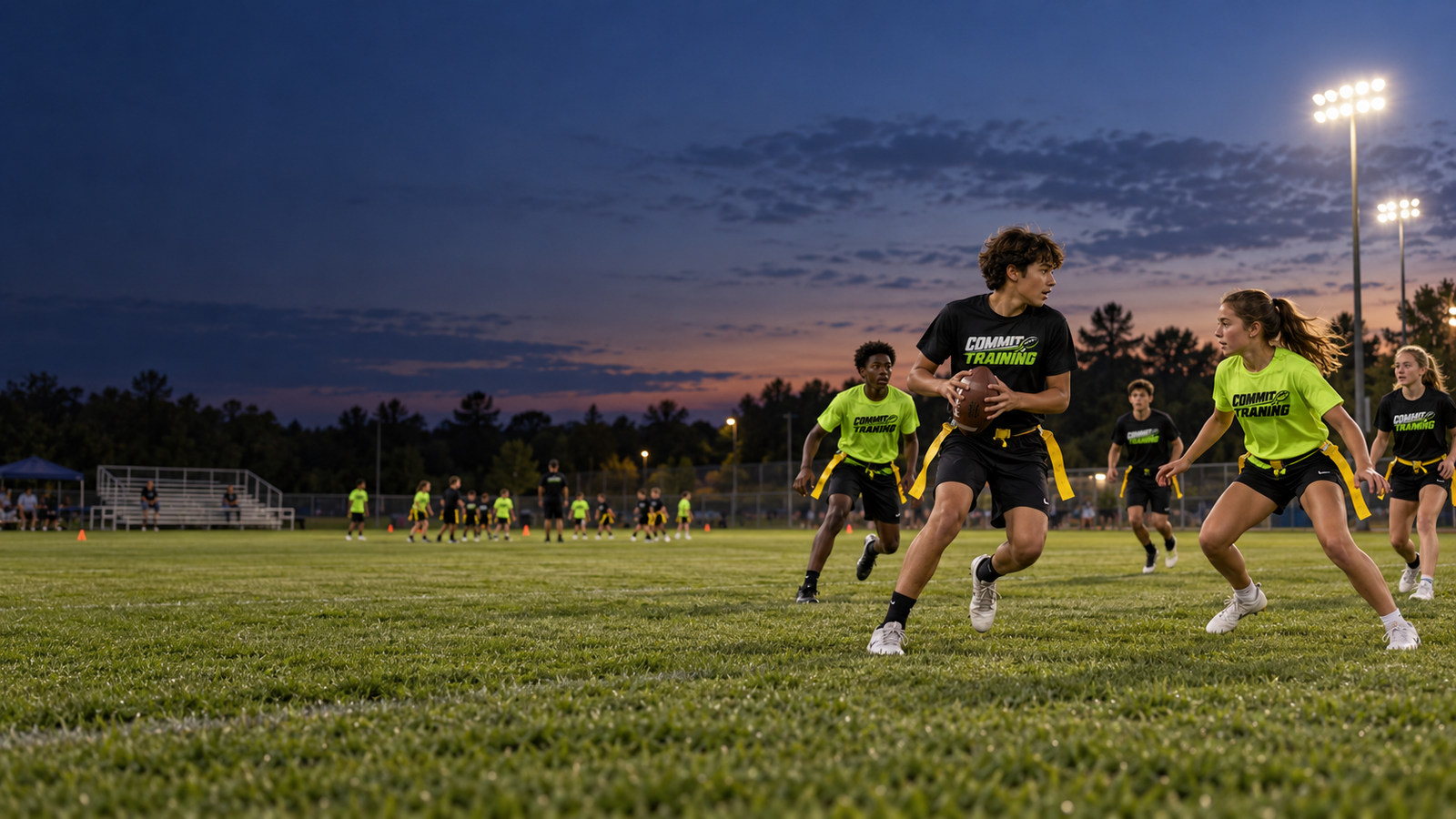
In October 2023, flag football was officially added to the program for the Olympic Games Los Angeles 2028. The announcement was historic — American football, in any form, had never appeared at the Olympics. For a sport built in backyards, schoolyards, and recreational leagues across the country, it was a transformational moment.
Then, in May 2025, the NFL made it official: NFL clubs voted to permit the participation of active NFL players in flag football at the 2028 Olympics. The world's best football players — not retired legends, but active stars — could compete for Olympic gold. The move immediately ignited conversation about which players would suit up, and sent a clear message to young athletes everywhere: flag football is the real deal.
How Flag Football Got Here
Flag football's path to the Olympics wasn't an overnight phenomenon. The sport has been played in organized formats since at least the 1940s, growing steadily through military recreation programs, school leagues, and community organizations. But its modern acceleration is a product of deliberate investment from the NFL, international federation development, and a cultural shift in how parents and athletes think about football.
The NFL's investment in flag football — through partnerships with RCX Sports and others — created accessible recreational entry points for youth players. As flag programs multiplied and talent developed, international federation IFAF (International Federation of American Football) worked to build competitive structures that could satisfy the International Olympic Committee's requirements. The result was a sport with a clear development pathway from youth leagues to a global stage.
The NFL Factor
When the NFL decided to let its players compete at the Olympics, it wasn't just a business decision — it was a statement about the sport's legitimacy and future. NFL players are the most recognizable athletes in American sports, and their participation in flag football on the world's biggest stage will do for the sport what NBA participation did for international basketball: create a generation of inspired young players who see themselves in those athletes.
For youth flag football programs across the country, the message is profound. Today's 10-year-old learning routes at a clinic might be watching the Olympics in two years, seeing professional football players compete in a format they know and love. That kind of visibility changes everything about how a sport is perceived and pursued.
"In October 2023, flag football was officially added to the 2028 Olympic Games program — American football's first appearance at the Olympics in any form."
The Complete Development Pathway
What the Olympics has done for flag football is complete a development pathway that didn't fully exist before. Young athletes now have:
- Youth leagues (ages 6–12) — recreational entry points, co-ed programs, skills development
- High school programs — now in 37+ states for girls, widely available for boys and girls
- College programs — over 250 programs and growing, including NAIA and club-level competition
- Professional leagues — Fan Controlled Football, various arena and flag-specific leagues
- International competition — IFAF World Championships
- Olympics — the pinnacle, launching in 2028
This is a complete sports ecosystem. It wasn't always there. The fact that it exists now — and is growing at every level — creates the kind of incentive structures that sustain long-term participation and development.
Global Growth Accelerates the Pipeline
Olympic inclusion doesn't just matter for American athletes. Countries around the world are now investing in flag football programs with Olympic competition in mind. Nations in Europe, Asia, Africa, and South America are building national programs and development pipelines. This global expansion expands international competition, creates coaching and playing opportunities globally, and elevates the overall standard of the game.
For young American athletes, that means a more competitive global environment in which to develop — and more opportunities to represent their country at the highest level of sport.
What It Means for Every Youth Player Today
If you're a young athlete playing flag football right now — in a school yard, a Sunday clinic, a co-ed recreational league — you're participating in the sport at the precise moment it becomes something bigger than anyone could have imagined a decade ago. The foundation you're building today — the route running, the footwork, the football IQ, the competitive mindset — is the same foundation that will carry the best flag football players to Los Angeles in two years.
Every great Olympic athlete started somewhere. They started with a catch. A flag pull. A run that made everyone on the field stop and watch. Start there. See where it goes.
Sources
- Olympics.com — NFL Players Cleared to Compete in Flag Football at LA28 Olympics
- NFL.com — NFL Clubs Approve Participation of NFL Players in 2028 Olympic Games (May 2025)
- Olympics.com — Which NFL Stars Are Interested in Competing in Flag Football at LA28?
- Note: The originally referenced AP News article (apnews.com/article/834a8df578cce5f11595c31dd46801ce) returned a 403 access error; all verifiable facts above are sourced from NFL.com and Olympics.com directly.